



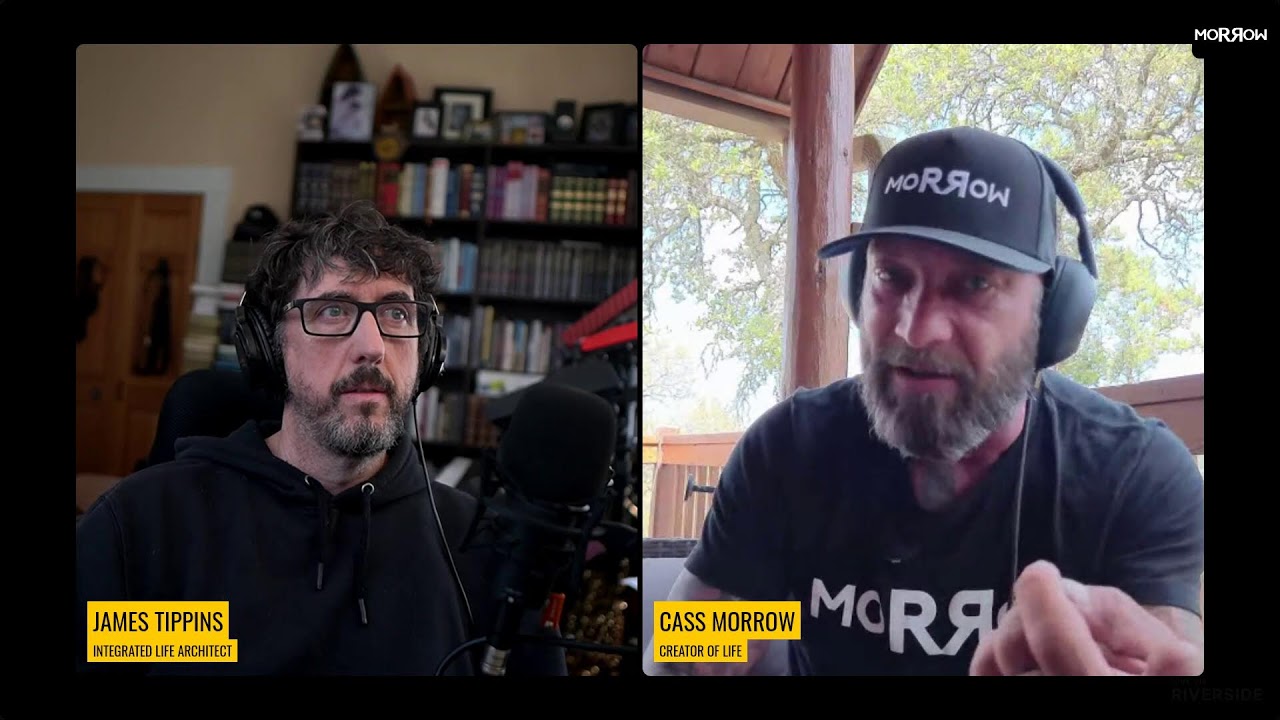

A man reached out to Cass recently. Became paraplegic five years ago. His wife — the woman who stayed, who showed up — is now drowning in depression alongside him.
He asked: How do I help her when I can barely help myself?
It’s one of the heaviest questions a man can carry. And it led Cass and James Tippins into one of the deepest conversations they’ve ever had.
Because the real problem isn’t depression. It’s what you do with it.
”It Happened to You. It Is NOT You.”
This is the foundational teaching behind everything Cass and James do.
External events — health crises, financial collapse, betrayal, loss — are things that happen to you. They are not you. That sounds simple. It’s not. Because when something catastrophic happens, the mind does a dangerous thing: it makes the event part of your identity.
You stop saying I’m experiencing depression and start saying I am depressed.
That shift — from experience to identity — is where the real damage happens. Because now every decision you make, every way you treat your partner, every thought you think comes from that pain-as-identity. You lead your life from the wound.
“I am insecure. I am fearful. I am depressed. We become it. The free man experiences it as weather.” — Cass Morrow
The work isn’t to stop the weather. The work is to stop being the weather.
Why Depression Ruins Marriages (It’s Not What You Think)
Depression doesn’t destroy marriages because of the feeling itself. It destroys marriages because of what people do with it.
When you make depression your identity, it gets authority over every decision you make — including how you show up for your spouse. You stop leading. You start reacting. You stop being the man she’s trying to connect with, and instead become someone she has to manage.
That’s not a character flaw. It’s a pattern. And patterns can be broken.
James Tippins knows this personally. He’s 1,084 days anxiety-free — not because anxiety disappeared, but because it lost authority over him. The feeling still shows up sometimes. But it no longer drives the car.
This is what identity work actually produces: not the absence of hard feelings, but an inner foundation that those feelings can’t shake.
What Are STAT Responses — And Why They Matter
One of Cass’s core frameworks is STAT responses: the idea that when you know who you are, you can interact with the world from that identity regardless of what’s happening around you.
Most men’s emotional state is entirely controlled by circumstances. Good day at work → he’s available. Bad day → he’s checked out. She’s warm → he pursues. She’s cold → he either chases or shuts down.
STAT responses break that pattern. They mean you show up as yourself — your real self, not your triggered self — no matter what the conditions are.
Cass tells a story about getting kidney stones on New Year’s Eve and ending up in the ER. He spent the night making the nurses laugh.
Same man. Impossible circumstances. But his identity didn’t depend on conditions being easy.
That’s the goal. Not stoic numbness. Not toxic positivity. Real groundedness — the kind that only comes from knowing who you are underneath all the things that have happened to you.
The Codependency Trap: You’re Pulling Them Down With You
Here’s one of the most honest things Cass has ever said about his own marriage:
“When you get to the lowest part of your depression, you throw a lifeline to your partner and pull them down in with you. You don’t get up out of the water. You pull them down.” — Cass Morrow
That’s codependency. Not the clinical textbook version — the real, lived, daily version.
It looks like needing her to validate you before you can feel okay. It looks like punishing her with your mood when she doesn’t show up the way you need. It looks like making her your emotional support system while you refuse to do the work to become stable yourself.
You think you’re reaching for help. You’re actually pulling the boat down with you.
The shift happens when you stop expecting your partner to push your car — and start pushing it yourself. Once you’re moving, people help. When you sit still demanding rescue, they eventually drive past.
If you’re in the middle of a marriage crisis, this is usually the core issue underneath everything else.
”I Am Depressed” vs. “I’m Starting to Feel Depression”
Language isn’t just semantics. It’s the operating system.
“The worst thing depression tells you is that there is no one underneath it. That is the very first thing you have to stop believing.” — Cass Morrow
When you say I am depressed, you’ve accepted depression as your identity. There’s nowhere to go from there because it’s not a state you’re in — it’s who you are.
When you say I’m starting to feel depression, you’ve separated yourself from the feeling. You — your real self — are the one observing it. That separation is the beginning of freedom.
This isn’t a language trick. It’s a fundamental reorientation to who you believe yourself to be. And it requires actual identity work — not affirmations, not therapy worksheets, not motivation. It requires you to answer the question: Who am I when I strip away everything that’s happened to me?
Most men have never honestly answered that question. And until they do, they’ll keep leading their lives from the wound.
You Can’t Love Someone Who Doesn’t Love Themselves
This one lands hard — because it goes both directions.
If you don’t know who you are, there’s no one for your partner to actually know and love. She ends up loving a performance. A mask. A version of you that shifts with every crisis, every mood, every external event.
Real intimacy requires two people who can actually show up as themselves.
“Whoever she supposed to love? If you don’t know who you are and love you — who are they supposed to love?” — Cass Morrow
And the reverse is equally true. You cannot love a partner who doesn’t love themselves. You can manage them, rescue them, enable them — but you can’t actually love them, because there’s no stable person there to love. You’re loving a wound.
This is why reconnecting with your wife requires your own identity work first. You can’t build a real connection if one or both of you is showing up as a walking wound.
The One Sign You Still Don’t Know Who You Are
James Tippins offers a simple test.
Can you ask for help with a simple, clear question — without a long explanation of everything that happened to you first?
Most people can’t. When they reach out, they lead with a story. A monologue of context, history, and justification before they ever get to what they actually need.
That’s not a communication style. That’s a symptom. It means you don’t know what you need — which means you don’t know who you are yet.
When you’ve done enough identity work, you can say: “I need X. Can you help?” Direct. Clean. No performance, no backstory required.
Until then, every relationship becomes a stage where you’re constantly re-explaining yourself to feel seen.
What Kathryn’s Boundary Actually Did
Cass is honest about this: Kathryn stopping her enabling behavior was the catalyst that changed everything for him.
She didn’t leave. She stood in her strength and refused to keep pulling him back into patterns that were destroying him.
“Kathryn stopped enabling my behavior. She became the catalyst to move me forward. She didn’t just leave. She stood in her strength.” — Cass Morrow
This is the hard truth for partners of people in depression: enabling out of love can be the most unloving thing you do. Sometimes the most powerful thing a partner can do is stop making it comfortable for someone to stay stuck.
This isn’t permission to be cruel. It’s permission to stop destroying yourself to manage someone else’s pain.
If you’re the partner who’s been carrying everything, the White Picket Fence Project is built for exactly this moment.
Frequently Asked Questions
Why is depression ruining my marriage?
Depression ruins marriages not because of the feeling itself, but because people make it their identity. When you say “I am depressed” instead of “I’m starting to feel depression,” you give it authority over every decision — including how you treat your partner. The fix isn’t to escape the feeling. It’s to build an identity underneath it that doesn’t move.
What does “it happened to you, it’s not you” mean?
Cass Morrow’s foundational teaching: external events — illness, loss, betrayal, financial collapse — are things that happen to you. They are not you. The difference matters because when you make pain your identity, you lead your life from that pain. Identity work is the process of finding out who you are underneath all the things that have happened to you.
What are STAT responses in marriage coaching?
STAT responses are Cass Morrow’s framework for showing up with your real self regardless of circumstances. When you’ve done identity work, you interact with the world from who you are — not from what’s happening to you. Example: Cass had kidney stones on New Year’s Eve and made the ER staff laugh. Same man, impossible circumstances — because his identity didn’t depend on conditions being easy.
How do I stop being codependent with my spouse?
Cass Morrow describes codependency as “throwing a lifeline to your partner and pulling them down into the hole with you.” The shift happens when you stop expecting your partner to push your car — and start pushing it yourself. Once you’re moving, people naturally want to help. If you sit still expecting rescue, they drive past.
Why can’t you love someone who doesn’t love themselves?
If you don’t know who you are, there’s no one for your partner to actually know and love. You end up loving a performance — a mask. Real intimacy requires two people who can answer “who am I?” without a monologue of blame and backstory. Until then, you’re not in a relationship. You’re in a management contract.
How do I know if I’ve done enough identity work?
James Tippins’s test: Can you ask a simple question about what you need — without a long explanation of what happened to you? If you call for help and lead with a story instead of a question, you don’t know what you need yet, which means you don’t know who you are yet. Identity work is progressing when you can name what you need, ask for it directly, and receive it without over-explaining yourself.
The Bottom Line
Depression doesn’t disappear when you find yourself.
It loses authority.
It loses the ability to drive your decisions, define your identity, and destroy your marriage. You’ll still feel it sometimes. But you’ll feel it the way you feel weather — uncomfortable, maybe, but not defining.
That’s what identity work produces. Not a life free from hard feelings. A life where the hard feelings no longer run the show.
If you’re in a sexless marriage, a disconnected marriage, or a marriage that’s on the edge of failing — the work starts with this question: Who are you underneath everything that’s happened to you?
Ready to Stop Letting Depression Run Your Marriage?
The work starts now, brother.
The Marriage Reset is built for men who are done being defined by what happened to them. Identity work, real frameworks, and a community of men doing the same work.
Or if you’re ready to go all in: Apply directly →
Watch the full conversation with Cass Morrow and James Tippins above — they go deep on depression, identity, codependency, and what it actually takes to show up for your marriage and your life.
Ready to Save Your Marriage?
Pick the path that fits where you are. The work starts here — with or without your spouse.
Related Articles
I Made an Album About Your Marriage. Here's What's in It.
Cass Morrow's debut album Disrupting Divorce: 24 spoken word tracks for marriages on the edge. Here's what every song is about and why it was made.
By Cass Morrow
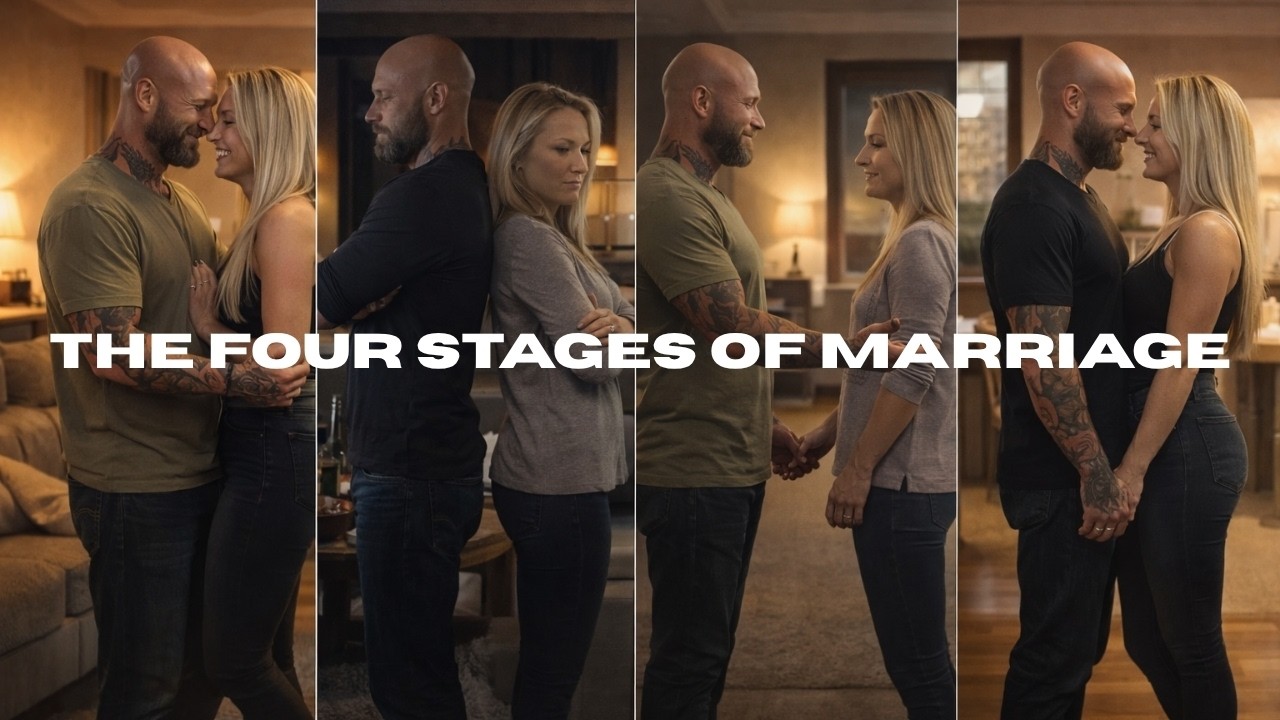
The 4 Stages of Marriage (Most Couples Never Make It Past Stage 2)
Honeymoon. Selfish. Impact. Passion. Cass Morrow breaks down the four stages every marriage moves through — and why most couples die quietly in stage two.
By Cass Morrow

Violence Ain't Just Physical: What Your Wife Is Living With Right Now
You've never hit her. But is she afraid of you? Cass Morrow breaks down emotional and psychological violence in marriage — and what it costs your wife every single day.
By Cass Morrow