



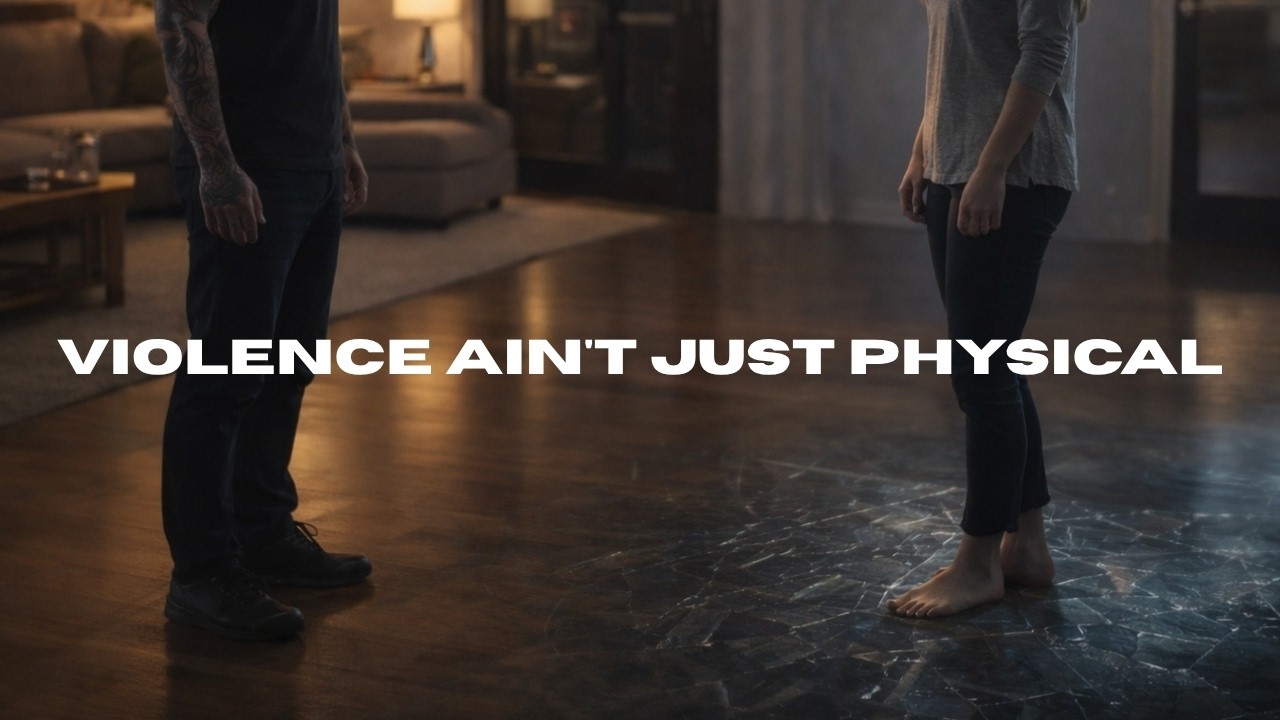

Emotional abuse in marriage is one of the most common patterns I see in men who come to me, and one of the least recognized. It does not require raised fists. It lives in the tone that goes cold when you are upset, the silence used as punishment, and the unpredictability that keeps a woman on alert inside her own home.
Most men doing this have no idea they are doing it. I didn’t.
I was the problem in my own marriage for years. I told myself I was a decent man because I had never hit Kathryn. That line was doing a lot of heavy lifting. It covered things I should have been looking at squarely. I made her afraid without a single bruise as evidence.
So why does she hold her breath when she hears your car in the driveway? Why does she read your face before she speaks? Why does she pick her words like broken glass, calculating how you will react before she gets a sentence out?
That’s not love, brother. That’s a woman trying to survive.
You Don’t Have to Raise Your Hands to Be Violent
This is probably the biggest lesson I can teach you.
Most men hear “violence” and they think fists. They think bruises and police reports and obvious stuff.
But violence isn’t just physical.
You can do it with your voice. With your silence. With a look, a sneer, a tone. With the way a room goes cold the second you walk through the door. With the way your posture changes when you’re angry and she knows — she always knows — before you say a single word.
You never left a physical mark. You left permanent scars.
That’s the hardest thing for men to hear. And it’s the most important.
Kathryn Told Me Something That Broke Me
Kathryn told me once she wished I had hit her.
At least then she’d have something real to show. A wound that people would recognize. Something she could point to and say — this is what happened to me.
Instead, she had invisible wounds. The kind where she started questioning her own reality. Wondering if she was crazy. Wondering if what she was experiencing was even real, because there was nothing she could put her finger on.
She called for help one night — didn’t know what I might do. And God help me when I think about that. I didn’t know what I might do either.
That’s what emotional violence does. It doesn’t just hurt her — it puts her in a cage where she can’t even name what’s breaking her.
And if she can’t name what broke her, how does she ever start to heal?
What Emotional Violence Actually Looks Like
I’m not talking about your fists. I’m talking about patterns you might not even recognize as harmful:
- Your tone. The cold, clipped, I’m not angry voice that she knows means you’re furious.
- Your silence. The stonewalling. The emotional shutdown that leaves her alone in the room with you.
- Your face. The eye rolls. The sighs. The “fine, whatever” energy that communicates contempt without a single cruel word.
- Your unpredictability. She never knows which version of you is walking through that door. Happy Cass or ticking-time-bomb Cass. So she spends all day managing her behavior to control yours.
- Your reactions. She edits herself before she speaks because she’s mentally running through how you’ll respond. That’s called living in fear, man.
This is what I did for years. I never punched Kathryn. But I flipped her out of a bed. I smashed things. I towered over her. I called her the worst names when I was in a low. I compared her to exes. I made her feel like she was the crazy one.
I was physical enough that I might as well have punched her in the face.
And more than that — I was emotionally violent in ways that went even deeper than the physical intimidation.
”I’ve Never Hit Her” Is Not the Bar
This is something I hear constantly from men who come to me.
“But I’ve never hit her.”
Brother. That’s like saying you’ve never cheated. That should be normal. That should be the floor, not the ceiling you’re measuring yourself against.
The bar is not absence of physical violence. The bar is: does she feel safe with you?
Does she hold her breath when you walk in? Do her shoulders come down or go up when you enter the room? Does she laugh freely in front of you, or does she manage herself around you?
If she holds her breath when you walk in — you’re violent.
That’s a hard sentence. I know it is. But I’d rather give you the hard truth now than let you coast on “at least I never hit her” while your marriage dies.
You Don’t Get to Decide What Hurts Her
Here’s something men get wrong constantly.
We minimize her experience. We say things like:
- “I didn’t mean it like that.”
- “You’re too sensitive.”
- “That’s not what happened.”
- “You’re blowing this out of proportion.”
When we do that, we’re deciding for her what’s real and what isn’t. We’re overriding her lived experience with our own narrative.
You don’t get to decide what hurts her. You get to decide whether you bring her back to life.
Her terror is real even if you didn’t leave a bruise. Her wounds are real even if nobody else can see them. And dismissing that — gaslighting her into doubting her own reality — is one of the cruelest forms of violence there is.
This Is the Work
I’m not writing this to make you feel like a monster. I’m writing this because most men genuinely don’t know they’re doing it.
Nobody taught us this. We learned from our fathers, who learned from theirs. We got the message that silence was strength, that anger was control, that a raised voice meant authority.
It doesn’t. It means fear. And you’ve been living in a house built on fear for too long.
The good news: this is changeable. I know because I changed it.
The man who flipped Kathryn out of a bed is not the man writing this. The man who made her question her reality is not the man she runs across the room to touch the face of.
But it required me to stop pointing at what I hadn’t done and start taking full ownership of what I had done.
That’s where it starts, brother. Not with defending yourself. With seeing yourself clearly.
Start Here If You’re Ready
If this landed — if you read “she holds her breath when you walk in” and something in you shifted — that’s your moment.
The Marriage Reset is where men do this work. Identity-level change. Real frameworks. A community of men who are done making excuses and ready to become someone their wife actually feels safe with.
Or go all in: Apply directly →
Frequently Asked Questions
Is emotional abuse worse than physical abuse?
Both cause serious harm. But emotional and psychological violence is often harder to recognize and harder to heal from, precisely because it leaves no visible marks. When a woman can’t name what’s hurting her, she starts to doubt her own reality — a phenomenon called gaslighting. Research consistently shows that emotional abuse can cause long-term trauma, depression, anxiety, and PTSD. The absence of physical violence does not mean the absence of abuse.
How do I know if I’m being emotionally abusive in my marriage?
Ask yourself this: does your wife hold her breath when you walk in the room? Does she edit what she’s about to say based on how she thinks you’ll react? Does the atmosphere in your home change when your mood changes? If yes — you are creating an environment of fear, even if you never intended to. Other signs include stonewalling, contempt, unpredictable emotional responses, minimizing her feelings, and using silence as punishment.
Can a marriage recover from emotional abuse?
Yes — but only if the person causing harm takes full ownership and does deep identity-level work. Surface changes don’t hold. Apologies without behavioral change rebuild nothing. What works is sustained, consistent transformation: learning to regulate emotions, developing empathy, building safety instead of fear. Cass and Kathryn are living proof that it’s possible.
What’s the difference between emotional violence and just having a bad temper?
A bad temper is something that happens to you. Emotional violence is a pattern of behavior that controls or harms your partner — whether intentional or not. The key question isn’t your intention; it’s the impact on her. If she is chronically afraid, walking on eggshells, or suppressing herself around you, that’s the impact of emotional violence regardless of whether you “meant” it.
What should I do if I recognize these patterns in myself?
Start by acknowledging it — fully, without excuses or qualifications. No “but she also…” Just own what’s true. Then get into a program specifically designed for this work. General therapy rarely touches identity-level patterns the way focused marriage and leadership coaching does. The Marriage Reset was built for exactly this.
Prefer Morrow Marriage in Google
Ready to Save Your Marriage?
Pick the path that fits where you are. The work starts here — with or without your spouse.
Related Articles
Why Am I So Angry at My Wife? Your Anger Isn't the Real Feeling
Why am I so angry at my wife? Anger is usually the feeling on top of something worse underneath. Cass Morrow on the crazy train, why your mouth is the wrong place to work it out, and what to do instead.
By Cass Morrow

How to Make My Wife Feel Safe (What Actually Builds It)
How to make your wife feel safe: become predictable in the moments you used to blow up, go cold, or defend yourself. Cass Morrow on why safety is built by your reactions over months, not by one apology or one good conversation.
By Cass Morrow

What Would It Be Like To Be Married To Someone Else?
Wondering what it would be like to be married to someone else is common, and it tells you more about you than about your wife. Cass Morrow on the escape fantasy, what it costs at home, and the marriage you can still build.
By Cass Morrow