



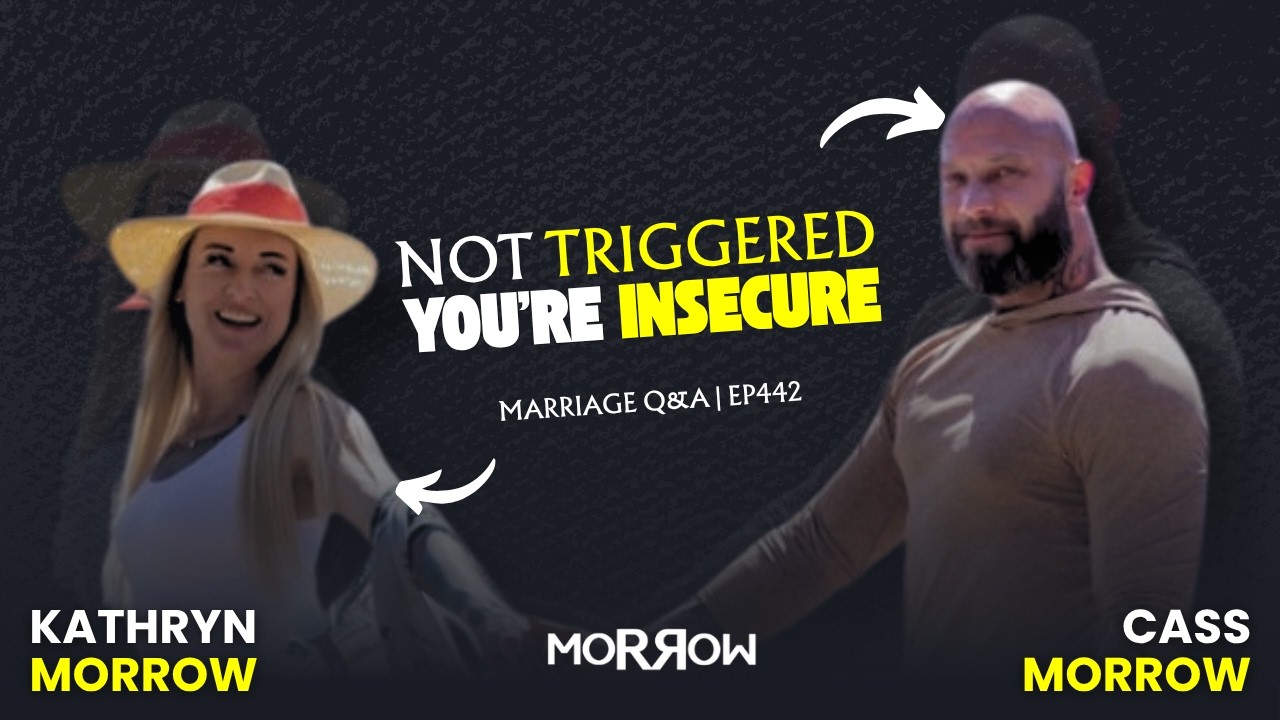

Insecurity in marriage destroys what men are most trying to protect. If your relationship is deteriorating and you cannot figure out why your wife keeps pulling away, insecurity is usually what is running underneath it.
It almost never looks like what you expect. It does not show up as crying or admitting you are afraid. It shows up as checking her phone. Needing to know where she is and who she is with. Starting a fight when she seems distant. Getting defensive when she mentions a male coworker. Interpreting every piece of emotional distance as evidence of something bad. That is insecurity. Most men call it being triggered, because triggered sounds clinical and insecurity sounds like a character flaw.
There are real trauma responses. I am not dismissing those. But most of the time when a man tells me he got triggered by his wife’s tone, what he is actually telling me is that his insecurity is making the decisions for him. And until he understands that, nothing he does in the marriage is going to work the way he wants it to.
That is what this is about.
What Insecurity Actually Looks Like in a Marriage
Insecurity in men doesn’t usually look like what you’d expect.
It rarely looks like crying in the parking lot or admitting you’re afraid. More often it looks like control. Jealousy. Needing to know where she is. Getting defensive when she talks about a male friend. Checking her phone. Starting a fight when she seems distant. Needing constant reassurance but calling it “just wanting connection.”
It looks like overreacting to small things — because small things, when you’re insecure, aren’t actually small. They’re evidence. Every piece of distance becomes proof of something bad. Every moment she doesn’t respond the way you hoped confirms a story you’re already telling yourself.
That story usually sounds like: I’m not enough. She’s going to leave. I can’t trust her. I can’t trust myself to keep her.
Men rarely say those words out loud. Instead they turn the fear outward. The fear becomes accusation. The insecurity becomes conflict. And the relationship pays the price for something that started inside the man.
The Real Source of the Insecurity
Here’s the hard question, brother. Where did the story come from?
For most men, the insecurity predates the marriage. It predates the relationship. It starts in childhood — in a home where love was conditional, where a parent left or checked out, where you learned that your value was something you had to earn and could always be revoked.
That wound doesn’t announce itself. It just runs quietly in the background, shaping how you interpret everything your wife does or doesn’t do. She smiles at another man and the wound activates. She’s short with you and the wound says it’s about you. She pulls back emotionally and the wound says you’re losing her.
None of those interpretations may be accurate. But when the wound is running the show, accuracy isn’t the point. Confirmation is.
Understanding this doesn’t fix it — but it does give you something to work with. It means the problem isn’t actually your wife. It’s the lens you’re seeing her through.
If you’ve been stuck in a pattern that feels like signs your marriage is failing but you can’t pinpoint why, insecurity is often the invisible root cause.
Why “Working On Your Triggers” Isn’t the Fix
I see men trying to manage their triggers the same way they try to manage their anger. They read about it, they breathe through it, they try to stay calm in the moment.
That’s not healing. That’s containing a fire that keeps relighting.
You can get better at not reacting, but if the insecurity at the root is untouched, you’re still going to be living on a hair trigger. Something will eventually push you past your containment capacity, and it’ll come out — usually at the worst possible time, usually bigger than it needed to be because it’s been building.
The fix for insecurity isn’t better coping. It’s identity work.
Who are you when she doesn’t validate you? Who are you when she’s distant? Who are you when another man gets her attention? If the answer is “a worse version of myself” — that’s the work. Building an identity that isn’t contingent on her response to you.
This is exactly what The Marriage Reset is designed to address — not surface-level behavior change, but the foundational shift in how you see yourself.
What It Looks Like to Work Through It
This is real work. It’s not fast. But it’s straightforward.
First, you name it accurately. Not “I got triggered.” Try: “I felt insecure when she did that.” Say it that way, even just to yourself. Naming it correctly gives you something to work with.
Second, you trace the interpretation. When she pulled back and you felt the fear — what did you tell yourself? Write it down. “She’s losing interest.” “She’s comparing me to someone else.” “I’m not good enough.” Look at it on the page. Is that actually what happened? Or is that the wound talking?
Third, you build something that doesn’t need her to validate it. A purpose. A discipline. A practice. Men who have something solid to stand on don’t collapse when their wife has a bad week. The insecurity loses its grip when your identity isn’t solely built on whether your marriage is going well.
And fourth — which is the hardest — you communicate from the real place. Not “you’re always talking to that guy,” but “I felt insecure when I saw you two talking, and I know that’s mine to deal with.” That’s a different conversation. It’s vulnerable without being an accusation. Most men can’t do it yet. That’s exactly why learning to do it matters.
Insecurity and the Cycle It Creates
Here’s what insecurity does to a marriage over time. The man is insecure, so he behaves in ways designed to get reassurance — control, jealousy, neediness, anger. His behavior pushes her away or makes her defensive. Now there’s actual distance. The man interprets that distance as confirmation of his original fear. The insecurity deepens.
The cycle feeds itself. The more insecure he is, the more he does the things that create the outcome he’s afraid of.
I’ve watched men lose their marriages to patterns that had almost nothing to do with their wives and everything to do with unresolved fear running through a decade of behavior. If you’re working through this pattern and also dealing with how to save your marriage alone, understanding insecurity as a driver is critical — because the changes you need to make are internal.
Breaking the cycle requires interrupting it at the source — not managing the behavior better, but dismantling the story underneath it. That’s the only way out.
Frequently Asked Questions
How do I know if it’s real insecurity or a real problem in the relationship?
Both can be true at once. Start by asking: is there concrete evidence, or am I interpreting ambiguous behavior through a fear lens? Insecurity fills in blanks with worst-case scenarios. A real problem usually has clear, repeated, concrete behaviors that would concern most people. Get honest about which one you’re working with — and get a sounding board if you’re too close to it to see clearly.
My wife says I’m too jealous. Is she right?
Probably, yes. Not because jealousy is weak — it’s a natural feeling. But acting on jealousy through control or accusation is a problem, and if she’s naming it, it’s landing on her as a problem. The question isn’t whether you feel it. It’s whether you’re making her responsible for managing your feeling of it.
How long does identity work actually take?
It’s not a project with a deadline. It’s a practice. Most men notice meaningful change in 3 to 6 months of focused work — by focused, I mean actual reflection, community, accountability, and behavior shift. The deeper the wound, the more time it takes. But even early in the process, small wins compound.
Can I do this work while my marriage is actively struggling?
Yes, and you should. Waiting for the marriage to stabilize before you start working on yourself is backwards — the work creates the stability. Don’t wait for better conditions. Build them.
What if I bring up my insecurity and she uses it against me?
That’s a real concern, and I don’t dismiss it. Vulnerability requires some safety. If your marriage is in a place where honest disclosure leads to exploitation, you may need help building that safety first before the deeper conversations are possible. That’s part of what good coaching does — it creates structure for those conversations to happen constructively.
What to Do Next
Insecurity isn’t a character flaw. It’s an unmet developmental need that got wired into your nervous system before you were old enough to choose otherwise.
But you’re old enough now. You can choose to look at it honestly. You can choose to do something about it. You can choose to stop letting a story that was written about you in childhood determine what your marriage looks like today.
That choice is the beginning of rebuilding trust — not just with her, but with yourself.
Ready to Do the Identity Work?
If this hit close to home, the work is available.
The Marriage Reset is for men who are done being run by patterns they didn’t choose. Real identity work. A community of men doing the same work. A framework that goes beneath behavior change.
Or if you’re ready to go all in: Apply directly →
Prefer Morrow Marriage in Google
Ready to Save Your Marriage?
Pick the path that fits where you are. The work starts here — with or without your spouse.
Related Articles
Why Saving Your Marriage Isn't Enough
Saving your marriage isn't enough because the whole project is still about you. Cass Morrow on why men who only chase their wife back stay stuck, and what has to grow outside the house first.
By Cass Morrow

How to Date Your Wife Again (And What to Do When She Says No)
Most men trying to date their wife again start in the wrong place. Cass Morrow shares the exact habits from the Marriage Reset that rebuild pursuit -- and what to do when she refuses every plan you make.
By Cass Morrow

How to Save Your Marriage When Your Wife Wants a Divorce
If your wife wants a divorce, most of what men do in those first days makes it worse. Cass Morrow shares what actually works -- and the exact response that keeps the door open.
By Cass Morrow