



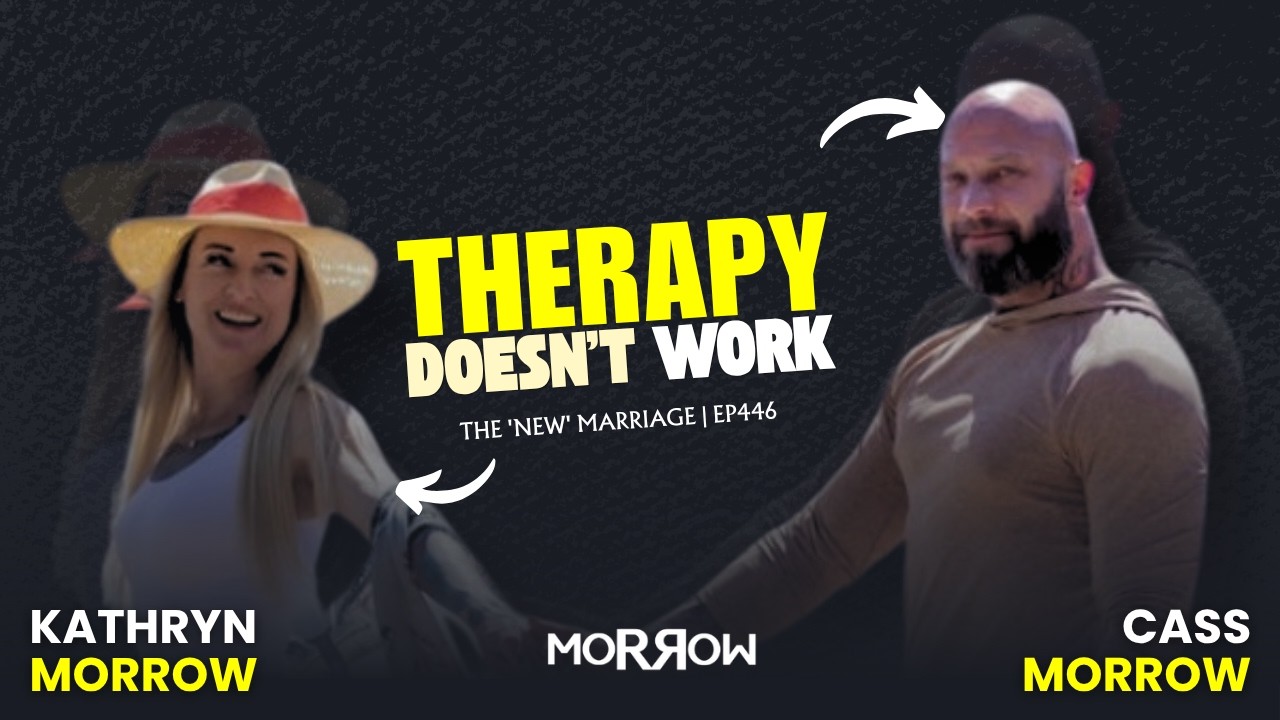

Marriage counseling works for some couples. For most of the men I work with, it did not.
Two years on that couch, doing the homework, reading the books, saying the right things in the right way. And the marriage was worse than when they started. Not because they failed counseling. Because counseling was the wrong tool for the problem.
Standard marriage counseling is built for individual healing, not for the leadership and connection breakdown that kills most marriages. When your wife is emotionally withdrawn, you have not been intimate in months, and you are fighting the same argument every week, that is not a clinical problem. That is a man problem. Counseling will help you talk about the pain more coherently. It rarely touches what is underneath it.
Understanding why counseling does not work for most struggling marriages is the first step toward doing what actually does.
What Therapy Is Actually Designed For
Therapy is a container for individual processing. It’s where you go to understand your patterns, unpack your childhood, develop language for your internal experience. That work has real value. I’ve done it. I recommend it.
But marriage is not a therapeutic relationship. Marriage is a dynamic system between two people with competing needs, histories, and survival strategies. When you run it through a therapy model — weekly sessions, communication exercises, validated feelings on both sides — you are applying a healing tool to a leadership problem.
Most marriages don’t fail because people can’t communicate their feelings. They fail because the man stopped leading, the woman stopped trusting, and both of them started managing the relationship like it was a patient.
You can’t talk your way into a different dynamic. You have to become a different person in the dynamic.
The Validation Loop That Goes Nowhere
Here’s what happens in most couples therapy. You take turns talking. The therapist reflects back what each person said. You’re asked to validate each other’s feelings. You leave feeling heard.
Then you drive home and nothing has changed.
Because validation without transformation is just a cleaner argument. You’ve organized the pain better. You haven’t touched the source of it.
The source in most cases — not all, but most — is that the man is not showing up as a leader in the home. Not in an authoritarian way. In a grounded, present, “I know who I am and where we’re going” way. She can’t relax into a man she doesn’t trust. She can’t trust a man who needs to process his feelings before he acts. She needs to feel safe, and safe comes from strength, not from shared vulnerability in a therapist’s office.
If you’ve been to couples therapy and want to understand what else is available, read through marriage coaching vs counseling — the difference matters more than most people realize.
The Problem with Neutral Ground
A therapist’s job is to remain neutral. They can’t take sides. They validate both partners equally. That sounds fair. In practice, it means no one is ever told directly: you are the problem here. This needs to change. Here’s what change looks like.
Most men in struggling marriages need exactly that. They need someone to look them in the eye and say: this is yours to fix. Not because the wife is perfect. But because the man is the variable. He’s the one who has the most leverage to change the trajectory of the marriage. When you give him equal blame and call it neutral, you’ve taken away his sense of agency.
Men respond to accountability. They respond to someone who says: you’re capable of more. Here’s the standard. Here’s the work. Men do not typically respond to fifty-fifty finger-pointing in a room full of tissues.
What Actually Works
I’m biased, obviously. This is what I do. But I’ll tell you what I’ve seen produce results, repeatedly.
First: the man decides he’s the variable. Not to absorb blame for everything — but because changing himself is the only thing he actually has control over. This one shift changes everything about how the work gets done.
Second: identity-level change, not behavior-level adjustment. Showing up on time for dinner is not going to save your marriage. Becoming a man who is present, grounded, and genuinely trustworthy — that changes the dynamic. She can’t stay cold to a man she actually respects.
Third: speed. Therapy moves slowly by design. It re-traumatizes gently over years. Men who are trying to save their marriages don’t have years. They need a framework they can act on this week. The men who’ve turned things around in the Marriage Reset did it by moving fast and adjusting, not by waiting for enough sessions.
Fourth: community. Isolation is one of the biggest drivers of male failure in marriage. Men who are working on their marriage in silence, going to therapy alone, trying to figure it out without other men who’ve been there — they’re at a massive disadvantage. What changes them is being in a room (physical or virtual) with men who’ve already done the work and are living differently.
When Therapy Is the Right Call
I want to be clear: there are situations where therapy is essential. Trauma, addiction, diagnosed mental health conditions, abuse — these require professional clinical support. I’m not equipped for those. No coaching framework is.
But if your marriage is struggling because the intimacy died, she’s emotionally withdrawn, you’re fighting about the same things, you feel like roommates — that’s not a clinical problem. That’s a leadership and identity problem. Therapy will organize your feelings about it. Coaching will change it.
The distinction between marriage coaching and marriage counseling isn’t about quality. It’s about fit. Match the tool to the problem.
Frequently Asked Questions
We’ve been in therapy for two years — should we quit?
Not necessarily. If individual therapy is helping you understand yourself better, that has value. Couples therapy specifically — if it’s been two years with no meaningful change, that’s worth interrogating. What is the goal? What would success look like? If neither of you can answer that clearly, you’re in maintenance mode, not transformation mode.
My wife wants us to try therapy first before coaching — what do I do?
Go. Do it genuinely. But also start the identity work on your own at the same time. Don’t wait for a co-signed permission structure to change. You can work a coaching framework while you’re in therapy — they’re not mutually exclusive.
Can a good therapist help save a marriage?
Yes, if the fit is right. There are therapists who work more like coaches — directive, accountability-based, focused on outcomes. If you find one who operates that way, great. The issue isn’t therapists as people. It’s the standard therapeutic model applied to a marriage problem.
Isn’t couples therapy better than nothing?
Sometimes, yes. If the only alternative is doing nothing, therapy provides structure and a neutral party, which can de-escalate conflict. But “better than nothing” is a low bar. If you’re serious about saving your marriage, you want something that’s actually built for the outcome you’re trying to achieve.
What if my wife won’t do coaching with me?
You can save your marriage alone. I know that sounds impossible. It’s not. When one partner changes at the identity level, the dynamic shifts regardless of whether the other partner is in a program. You can’t force her to change. You can change the man she’s married to. That’s enough.
The Bottom Line
Two years of therapy and a worse marriage isn’t a you problem. It’s a tool problem.
The work that changes marriages isn’t about understanding each other better in a clinical setting. It’s about one man — usually the man — deciding he’s done being the version of himself that created the situation he’s in.
That decision doesn’t need a therapist’s office. It needs a framework, accountability, and the guts to move on it.
Done Waiting for the Right Session to Fix Things?
If therapy hasn’t moved the needle, try a different tool.
The Marriage Reset is built around one principle: fix the man, watch the marriage follow. Identity work, real accountability, a community of men doing the same thing.
Or if you’re ready now: Apply directly →
Prefer Morrow Marriage in Google
Ready to Save Your Marriage?
Pick the path that fits where you are. The work starts here — with or without your spouse.
Related Articles

How to Save Your Marriage When Your Wife Wants a Divorce
If your wife wants a divorce, most of what men do in those first days makes it worse. Cass Morrow shares what actually works -- and the exact response that keeps the door open.
By Cass Morrow

How to Get Your Wife to Trust You Again After Cheating
How to get your wife to trust you again after cheating, from Cass Morrow. The behaviors that kill any chance of rebuilding, what she actually needs from you, and what to do when sorry has stopped working.
By Cass Morrow
My Wife Wants an Open Marriage: What It Actually Means
If your wife is suggesting you open the marriage, she's not asking for a new lifestyle. She's telling you the marriage is already empty. Cass Morrow breaks down what's really happening and why opening up will make it worse.
By Cass Morrow