




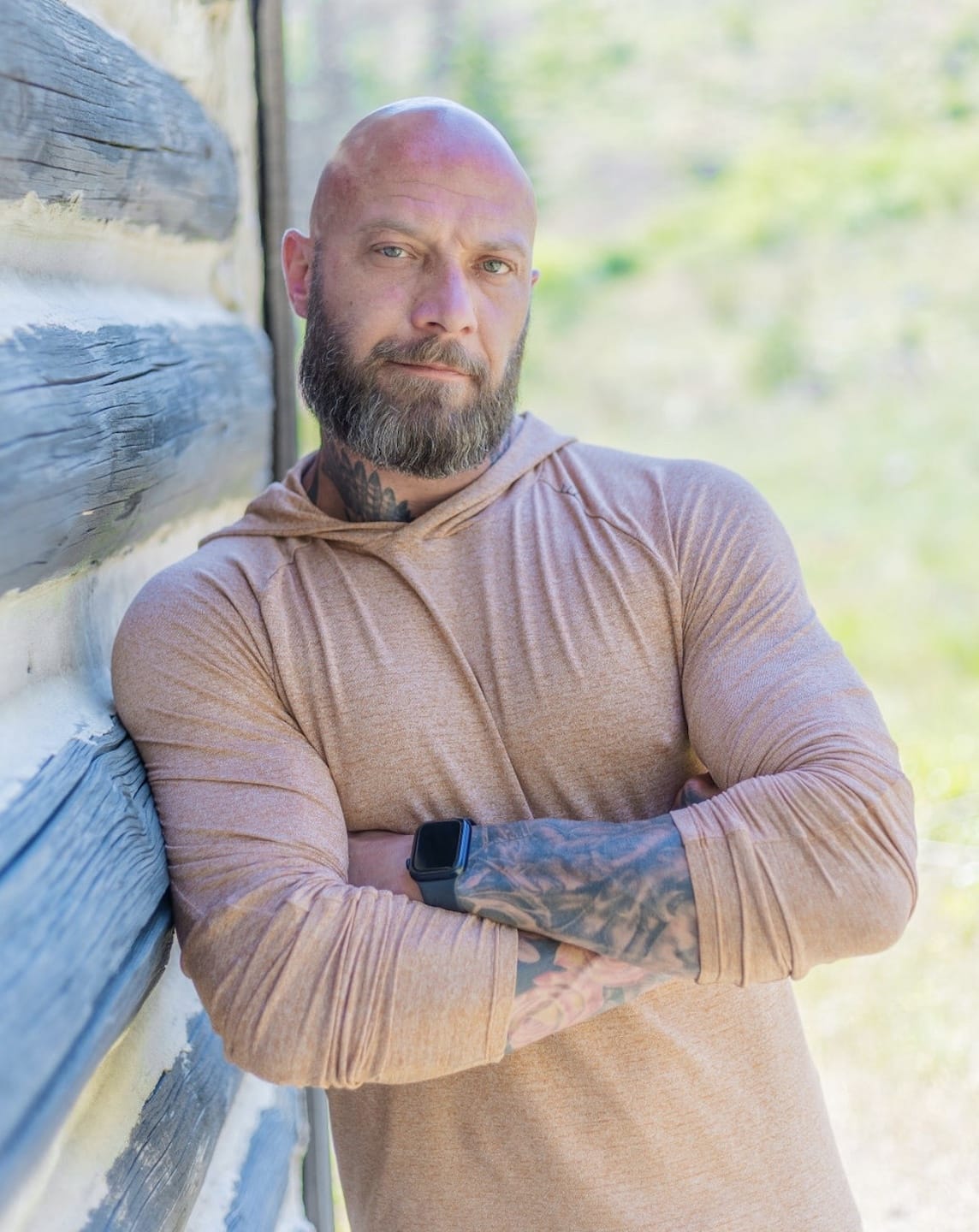
Relationship coaching for men is coaching that focuses on who you are as a man in your marriage. Your patterns, your identity, your leadership at home. Not your feelings. Not your wife’s behavior. If you’re reading this because your marriage is crumbling and nothing you’ve tried has worked, that distinction matters more than you know.
I’ve been coaching men through marriage crisis for years. Before that, I was the man my wife Kathryn nearly left. Narcissistic. Emotionally absent. Abusive. I pushed her to restraining orders, to separations, to divorce papers. For years I thought the problem was the situation. Or her. Or circumstances beyond my control.
It was me. That’s almost always where the real work starts.
What relationship coaching for men actually means
Most men who search this have already tried something. Couples therapy. Being more patient, more helpful, less reactive. Reading about communication or attachment or what women need. Something didn’t work, or worked for a week and then collapsed.
Relationship coaching for men operates on a different premise than most of what men try. The marriage does not improve until the man does. Not his behavior. His identity. The way he moves through his house, what he does when his wife is cold or distant or contemptuous, what he’s actually doing when he thinks he’s trying.
Generic life coaching helps with career, discipline, and goals. That is real work with real results. But if your marriage is falling apart, you need a coach who specifically understands attraction, respect, and what happens when a woman stops seeing her husband as someone worth following. Those are not the same skills as helping someone build better habits.
In the work I do with men, everything comes back to three things.
The first is ownership. Not just owning your mistakes in an apology. Taking 100% responsibility for the direction of your marriage regardless of what she has or hasn’t done. That’s a hard frame for most men because it means dropping the scoreboard. She may have plenty of her own side of the story. But you cannot change her side. You can only work yours. The men who resist this don’t move.
The second is the pattern break. Most men in a marriage crisis have been running the same loop for years without seeing it. They try something, it fails, they try harder, it fails again. A good coach names the loop from outside it. That’s the whole value. You cannot see your own water.
The third is what real leadership in a marriage actually looks like. Not control. Not dominance. Not managing her reactions to keep the peace. The kind of leadership where she feels safe enough to soften because you know who you are and you stopped chasing her approval. That version of you is attractive. The version doing everything right in hopes she’ll notice is not.
This is what the Marriage Reset coaching program was built around. Three areas, in order, each one building on the last.
Why men keep trying to fix this alone
I understand the instinct. Men handle things. They don’t ask for help. They figure it out.
The problem is that the patterns destroying your marriage are invisible from inside them. The man who placates his wife to keep the peace and then resents her for not responding warmly does not see that he’s doing it. He sees himself as trying. The man who provides everything and stays reasonable and still watches her drift further away cannot understand it from that vantage point.
There’s a principle I’ve taught from the beginning of this work: don’t prove, improve. Far too many men spend their energy trying to prove their worth to their wife, trying to force validation or connection, trying to demonstrate that they’re good enough. All of that energy spent on proving keeps them from the only thing that actually works, which is becoming a different man.
You cannot improve what you cannot see. That’s why outside perspective changes everything.
What I’ve seen across hundreds of coaching calls: men who lean on other men have a much stronger success rate. They don’t take the brutal backward steps that men working alone almost always take. When you’re isolated in your pain and your reality and your version of the story, you lose perspective fast. You end up making decisions from that contracted place and making things worse.
No man is above needing someone outside his own head. I use coaches myself. I’ve trained coaches in my method and I still let people I trust speak into my blind spots. If I’m not willing to do what I ask my men to do, I have no business asking.
What relationship coaching is not
It is not couples therapy. In couples therapy you’re both in the room trying to get your points across. For a man in crisis, that environment usually makes things worse. He gets defensive when he should be listening. He tries to explain when he should be changing. He comes out more dug in.
It is not marriage counseling with a different name. Most marriage counseling focuses on communication and mutual understanding. That has its place. But if the real issue is that your wife has lost attraction, lost respect, or started emotionally leaving the marriage, better communication techniques won’t fix it. Read this comparison of marriage coaching versus counseling if you’re weighing those options.
It is not a script or a method for getting her to warm up. I hear from men who want to know what to say, what move to make, what to try next. They’re focused on her response as the indicator of whether they’re doing it right. That’s the trap. She can see through behavior that isn’t backed by a real shift in who you are. You’ve probably already proven that. Two weeks of changed behavior followed by a collapse does not rebuild trust. It deepens skepticism.
What the work actually looks like
When I take a man into my program, we start with him, not the marriage. Who has he been, actually. Not the headline version. The patterns he doesn’t see. The ways he manages her instead of leads her. The nice guy behaviors that felt like love and registered as weakness. The decisions he stopped making because it was easier to go along.
That’s where the grip on the marriage went. Somewhere in there.
The goal is not to get her back. I know that sounds wrong. If getting her back is the target, every decision you make depends on her response. She warms up, you keep going. She pulls back, you panic. You’re still tethered to her mood, just in a different direction. That is not change.
The goal is to become the kind of man your wife wants to stay married to. Those are different targets. And only one of them is under your control.
In practice the work is uncomfortable. You’re going to look at patterns you’ve been running for years. You’re going to have harder conversations at home instead of the ones you’ve been having. You’re going to stop adjusting everything based on whether she seems approving.
I run 24 group coaching calls a week for men in the program. That number sounds like a lot because it is. I do it because men in crisis need density of support, not a weekly check-in. I also structure coaching as two-on-one, always with a backup coach, because one person’s perspective is not enough. You need multiple people outside your reality looking at the same situation.
The men who stay engaged and do the actual work change the trajectory of their marriages in 60 to 120 days. Not in dramatic moments. In small choices they stop making the old way. In conversations they don’t explode anymore. In the kind of man they are by the end of the day.
For the specific pattern that trips up most high-achieving men, read this post on why providing is not the same as leading. If you recognize yourself in it, you’re closer to understanding where you actually are than most men get without coaching.
How to know if relationship coaching for men is what you need
You need it if your wife has pulled back emotionally or physically and nothing you’ve tried has moved her. If you feel like you’re doing everything right and things keep getting worse. If you’re effective at work and completely lost at home. If couples therapy came and went without anything actually changing. If she’s mentioned separation or divorce and you don’t know what to do next.
You need it if you’ve been running the same pattern for years and cannot figure out how to stop from inside it.
You don’t need it if your marriage is solid and you want to level up as a person. Get a general life coach or a men’s group for that.
If any of those crisis signs fit, you don’t have a communication problem or a scheduling problem. You have an identity and dynamic problem. That’s what relationship coaching for men addresses.
The work is hard. Divorce is hard. Choose your hard. But choose it before she chooses for you.
To understand what losing her respect actually looks like from her side, read this post on what costs men their wife’s respect. Most men I work with say it’s the one they wish they’d read two years earlier.
FAQ: Relationship coaching for men
What is relationship coaching for men? It’s coaching that focuses on who a man is in his marriage, not just what he does. The work targets the patterns, identity gaps, and leadership failures that erode attraction and respect over time. The goal is to become a man your wife wants to stay married to, not to find the right thing to say to get her back.
Is relationship coaching different from couples therapy? Yes. Couples therapy puts both spouses in the same room working on mutual understanding. Relationship coaching for men focuses on the man, specifically: his patterns under pressure, his identity outside the marriage, and his behavior when the dynamic gets hard. For men in a crisis, that individual focus tends to produce more durable results than joint sessions.
Does relationship coaching for men actually work? It works for men who fully engage with it. Men who do the calls, do the work, and stay consistent over 90 to 120 days change the trajectory of their marriages. Men who absorb the material but don’t implement it see no movement. The program works if you do.
How long does relationship coaching take? Expect 90 to 120 days before you see real change in the dynamic between you and your wife. You’ll see evidence earlier than that in how you handle a hard conversation, or how you respond when she pushes back. But she needs to see consistent evidence over time before her guard comes down. Plan for months, not weeks.
What if my wife won’t do the coaching with me? She doesn’t need to. The premise of this work is that you cannot change her. You change you, and the dynamic shifts because you shifted. Most men I work with start alone. Many of them save their marriages without their wife ever joining a session.
Prefer Morrow Marriage in Google
Ready to Save Your Marriage?
Pick the path that fits where you are. The work starts here — with or without your spouse.
Related Articles

How to Apologize to My Wife (And Why Most Apologies Make It Worse)
If you want to know how to apologize to your wife, the order matters more than the words. Cass Morrow explains why apology comes after changed behavior, not before, and what to say when it is finally time.
By Cass Morrow
Why Saving Your Marriage Isn't Enough
Saving your marriage isn't enough because the whole project is still about you. Cass Morrow on why men who only chase their wife back stay stuck, and what has to grow outside the house first.
By Cass Morrow

How to Date Your Wife Again (And What to Do When She Says No)
Most men trying to date their wife again start in the wrong place. Cass Morrow shares the exact habits from the Marriage Reset that rebuild pursuit -- and what to do when she refuses every plan you make.
By Cass Morrow