



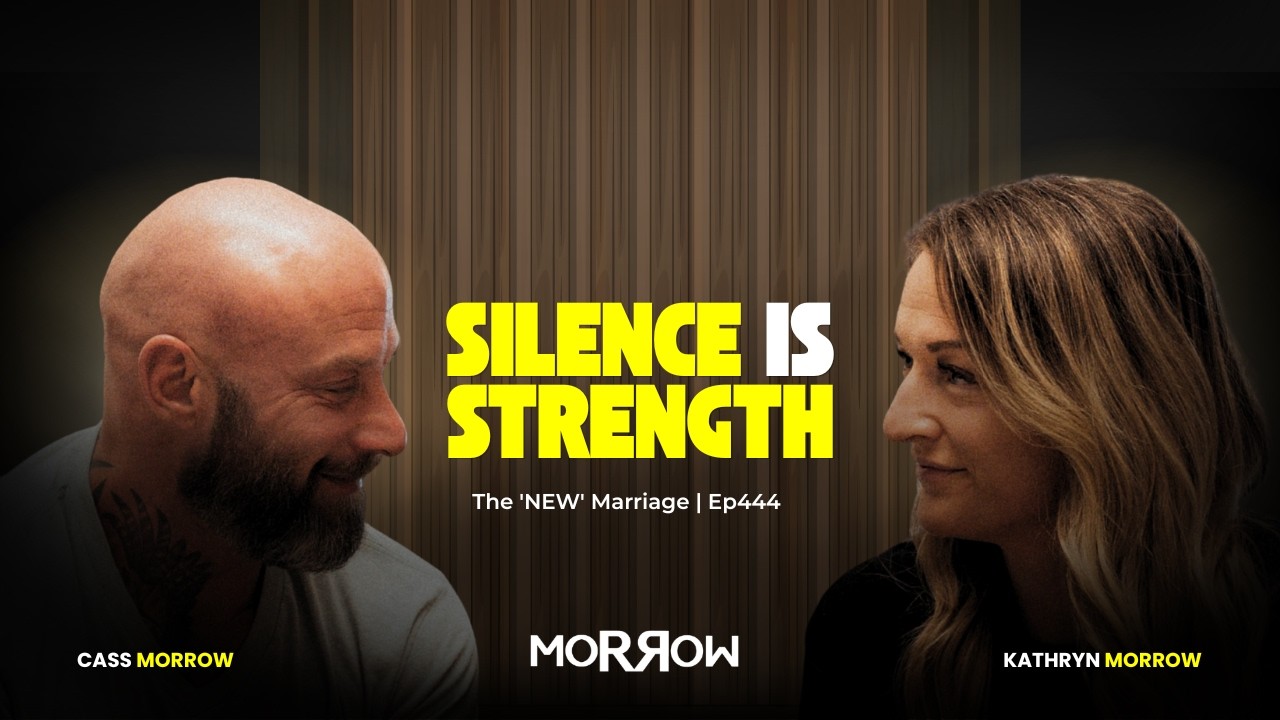

If you want to stop arguing with your wife, here is the answer most men never try: you go first. You stop first. You regulate first. Every argument takes two people choosing to keep going, and right now you cannot control her side of that equation. You can only control yours.
I used to think the man who talked more, won more.
If she said something unfair, I fired back. If she escalated, I matched it. If there was a silence, I rushed in to fill it with my explanation, my justification, my case. I thought winning the argument meant winning the marriage.
I was destroying it one sentence at a time.
Most men in distressed marriages talk way too much in the wrong moments. That talking does not de-escalate conflict. It feeds it. It does not build respect. It burns it down.
Learning to shut up is one of the hardest things a man can do. And one of the most powerful.
Why Men Over-Explain and What It Actually Signals
When you over-explain, you’re trying to control her perception of you.
You’re afraid that if she walks away thinking the wrong thing, the damage will be permanent. So you keep going. You keep adding context. You keep restating your position hoping she’ll finally get it.
But here’s what she actually sees: a man who can’t tolerate being misunderstood. A man whose stability depends on her seeing him correctly. A man who needs to manage her thoughts about him at all times.
That’s not strength. That’s anxiety with a loud voice.
A grounded man can sit with being misread. He knows who he is, and he doesn’t need to prove it in real time. When you can walk away from a charged conversation without having said the last word — that is power. That is the kind of presence that makes a woman feel safe with a man.
Silence as a Leadership Tool, Not a Punishment
There’s a version of silence that’s passive-aggressive. The cold shoulder. The one-word answers. The kind of silence designed to punish or manipulate.
That’s not what I’m talking about, and you need to be honest with yourself about which one you’re reaching for.
The silence I’m describing is chosen. It’s a man who reads a moment, recognizes that nothing useful will come from speaking right now, and decides not to.
That’s leadership. It’s the same judgment call a good coach makes when he doesn’t call a timeout — not because he’s checked out, but because he knows the moment doesn’t call for intervention.
In a heated exchange, most words make things worse. Your wife’s nervous system is already activated. Adding more words to an activated nervous system doesn’t calm it. It amplifies it. The fastest path to de-escalation is often the one where you stop contributing to the noise.
This is something I go deeper on in The Marriage Reset — the ability to hold the container without filling it. It’s a skill that takes practice, but it changes the dynamic completely.
What Happens When You Stop Talking First
The paradox of silence is that it creates space for her to hear herself.
When you stop defending, she stops attacking. When you stop explaining, she stops accusing. When you stop filling every quiet moment with your case, something shifts. She moves from her fight position to a more honest one.
I’ve watched this happen with hundreds of men. They go quiet — not cold, not checked out, but genuinely calm — and the whole temperature of the conversation drops. She asks a real question. She gets curious instead of combative. She says something that sounds like the woman he married.
That doesn’t happen when you’re both talking over each other. It can only happen when one of you leads by settling first.
And that’s you, brother. You lead first.
The Moments That Call for Silence
This is specific, so pay attention.
When she’s venting: your job isn’t to fix it or defend yourself. Let her finish. You’ll know she’s done when she’s said the same thing twice. After that, one question — not a rebuttal, a question.
When you’re angry: you will say something you can’t take back. If your heart rate is over 100 beats per minute, your prefrontal cortex is offline. You are not capable of saying anything useful right now. Name it out loud if you need to — “I need five minutes” — and mean it.
When she’s testing you: she will say provocative things, partly to see what you’re made of. The man who bites every hook is the man who can’t regulate himself. Don’t bite.
When the conversation is going in circles: same point, third time around, no new information. You’ve both said what you need to say. You ending it isn’t avoidance. It’s wisdom.
If you’re dealing with conflict patterns that feel impossible to break, read through how to reconnect with your wife and how men save marriage — communication is almost always at the root.
The Discipline Behind the Silence
Shutting up when you want to speak is a physical discipline, not just a mental one.
Your body wants to discharge. Your nervous system wants to move the energy out. Keeping it in without escalating requires you to breathe, to slow down, to stay present with the discomfort instead of releasing it through your mouth.
This is why I keep coming back to the identity work. Men who can’t stay quiet in conflict usually can’t stay quiet anywhere that matters — with their kids, in their friendships, under pressure at work. The silence is a symptom of something deeper: the capacity to feel something hard without immediately acting on it.
That’s the core masculine practice. Feel the thing. Don’t become the thing.
If you’ve been the guy who always has to have the last word, who always has to explain, who always has to defend — this is the work. Start small. Let one thing go this week. One. Watch what happens.
Frequently Asked Questions
Does staying silent mean I’m letting her walk all over me?
No. Silence in a heated moment is not submission. It’s self-regulation. The man who can’t control his own mouth is the man being controlled — by his emotions, by the argument, by her escalation. You choosing not to engage is you choosing what the conversation becomes. That’s leadership, not weakness.
What if she sees my silence as stonewalling?
There’s a difference between going quiet and going dark. Stonewalling is withdrawal — no eye contact, no presence, cold body language, leaving the room without acknowledgment. What I’m describing is staying present but choosing not to speak. You can say “I’m here, I just don’t have anything useful to add right now” — and then mean it.
What do I do with all the things I wanted to say?
Write them down after. Journal them. Bring them to a calm follow-up conversation when both of you are regulated. A lot of the time you’ll re-read what you wrote and be glad you didn’t say it in the moment. The things that actually need to be said can wait for when they can land.
How do I respond without fighting back when she says something unfair?
You can say something without escalating. “I hear you” buys time. “Let’s talk about this when we’re both calmer” is a legitimate response. What you’re avoiding is the match-for-match escalation — you said this so I’ll say that. Break the pattern. You go first.
Is silence useful in non-conflict moments too?
Yes. One of the most attractive things a man can do is be comfortable with quiet. Not every car ride needs to be filled. Not every dinner needs a topic. A man who can simply be present — without performing, without filling silence out of anxiety — is a man who feels grounded. She notices that.
What to Do Next
Silence is not the same as absence. It’s presence without noise.
Most men have been told their whole lives that confidence means being loud, being articulate, winning the room. In marriage, the room is your home. And winning it often means speaking less, listening more, and learning to sit in discomfort long enough that the real conversation has room to start.
This is one piece of a much larger framework. The Marriage Reset is built for men who are ready to do the identity work — not just adjust their behaviors, but change the man those behaviors are coming from.
Ready to Stop Fighting and Start Leading?
If this landed, the work starts now.
The Marriage Reset gives you the framework to become the kind of man who doesn’t need conflict to feel heard. Identity-level work. Real results.
Or if you’re ready to go all in: Apply directly →
Prefer Morrow Marriage in Google
Ready to Save Your Marriage?
Pick the path that fits where you are. The work starts here — with or without your spouse.
Related Articles

Why Saving Your Marriage Isn't Enough
Saving your marriage isn't enough because the whole project is still about you. Cass Morrow on why men who only chase their wife back stay stuck, and what has to grow outside the house first.
By Cass Morrow

How to Date Your Wife Again (And What to Do When She Says No)
Most men trying to date their wife again start in the wrong place. Cass Morrow shares the exact habits from the Marriage Reset that rebuild pursuit -- and what to do when she refuses every plan you make.
By Cass Morrow

How to Save Your Marriage When Your Wife Wants a Divorce
If your wife wants a divorce, most of what men do in those first days makes it worse. Cass Morrow shares what actually works -- and the exact response that keeps the door open.
By Cass Morrow