



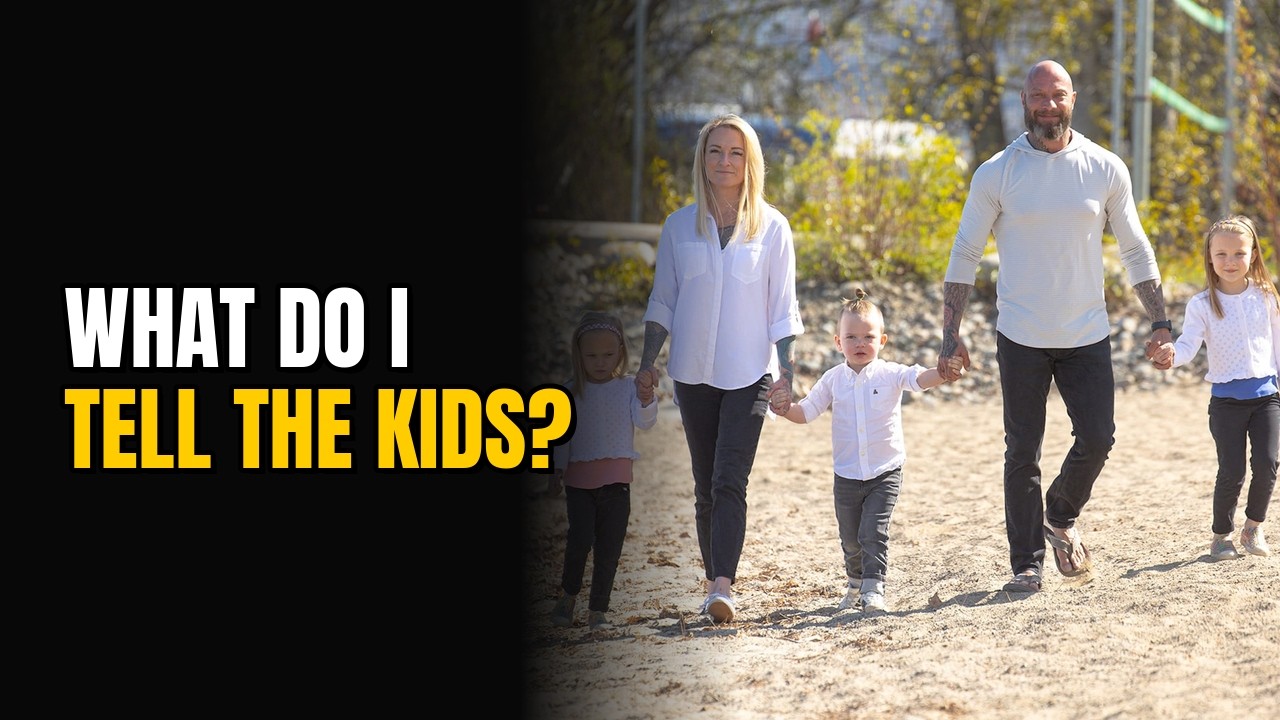

If you need to talk to your kids about marriage problems, here is the short version. Tell them the truth at a level they can hold, take responsibility for your part, and let them feel what they feel without rushing to fix it. Never ask them to take a side. Your kids are watching how you handle the conflict, and what they see teaches them more than any script.
Kids notice everything. When there is tension in the house, they know before anyone says a word, and then the questions start. “Why is daddy always on his phone?” “Why did mommy leave?” Most parents freeze.
Why a script from Google will not save you
A lot of parents go searching for the perfect sentence. Some ask Google. Some ask an AI. I understand the panic, but a script is not what your kid needs. A script cannot teach you to tell the truth and stay connected while you do it. That part has to be lived.
Your child can tell the difference between a parent reading lines and a parent who is actually present. The words matter less than whether you are honest, steady and in the room with them.
Acknowledge what they feel. Do not fix it.
When a child says they feel lonely or scared, the instinct is to repair it fast. “Don’t be scared, everything’s fine.” That shuts the door. They learn their feelings make you uncomfortable.
Try the opposite. Name what you see. “You miss when we all hung out together. That makes sense.” Then stay there for a moment. You do not have to solve it. You have to be a safe place for it.
I teach husbands the same thing about their wives, and it is the same skill. If you want to practice it with an adult first, start with stop telling, start asking: how to talk to your wife.
Take responsibility for your part
Kids do not need you to protect them from the truth. They need you to say plainly that the adults in the house have work to do, and that you are doing yours.
That means no blaming the other parent. You can say, “I’ve been on my phone too much and I’m working on being more present.” You cannot say, “Your mother is the reason we’re like this.” One of those invites your child into connection. The other hands them a weapon and a loyalty test.
If you caught yourself defending your side while reading that, notice it. Blame math keeps men stuck, and kids pay for it. Your side is the only one you can change.
Do not let them choose sides
When a child hears one parent run down the other, they start managing both of you. They comfort one, protect the other, and carry things no child should carry. That is triangulation, and it damages kids long after the argument is over.
Kathryn tells a story on the episode about the day a child asked her, “Why did you call daddy a jerk?” It is a good reminder that kids hear what we say when we think they are not listening, and that they ask about it later. Listen to how she handles it in the video.
The rule is simple. Whatever you say about the other parent, say it as if they are in the room.
Your kids’ questions are a mirror
Here is a part that stings. The questions your kids ask often point at the exact work you need to do with your spouse. “Why are you always on your phone?” is a question about attention. “Why are you mad all the time?” is a question about safety.
If your child is asking it, your wife is probably feeling it. Read how to make your wife feel safe and she doesn’t feel safe with you with your kids’ questions in mind.
Show them connection. Thank your wife out loud for what she does. Thank her for working. Some wives push back at first, because years of hurt do not melt on the first thank you. Keep going anyway, and do it where the kids can see a husband and wife who are building something instead of tolerating each other.
If things have already moved toward separation, trial separation and what it means for the marriage and my wife wants a separation cover the road ahead. And if you want help before it gets there, preventing divorce is where to start.
FAQ
What do I tell my kids when my wife and I are fighting?
Keep it honest and short. “Mom and Dad are having a hard time and we’re working on it. It isn’t your fault, and we both love you.” Skip the details and the blame. Let them ask follow-ups.
Should I tell my kids we might get divorced?
Not before you actually know. Handing a child a worry you cannot answer gives them something to carry alone. If separation is real and decided, tell them together, calmly, and focus on what stays the same for them.
What if my child asks why mommy left?
Say what is true without making her the villain. Acknowledge their sadness and stay with it. “You miss her, and that makes sense.” Then take your part: “Daddy has things to work on, and I’m working on them.”
Is it bad for kids to see their parents argue?
Kids can see tension. What hurts them is cruelty, contempt and conflict that never gets repaired. Let them see you disagree and then reconnect.
My child is acting out. Is it because of our marriage?
It can be. Children often show through behavior what they cannot say in words. Check the atmosphere at home before you change the child.
Your kids will learn what a marriage is by watching yours. You can give them honest answers and a father who owns his part, or you can keep handing them scripts.
Prefer Morrow Marriage in Google
Ready to Save Your Marriage?
Pick the path that fits where you are. The work starts here — with or without your spouse.
Related Articles

Blindsided by Divorce: Why It Never Really Comes Out of Nowhere
Blindsided by divorce? The spouse leaving has usually been checked out for two to five years. Cass Morrow on why you missed it, why quitting a bad habit is not change, and what to do first.
By Cass Morrow
Why Am I So Angry at My Wife? Your Anger Isn't the Real Feeling
Why am I so angry at my wife? Anger is usually the feeling on top of something worse underneath. Cass Morrow on the crazy train, why your mouth is the wrong place to work it out, and what to do instead.
By Cass Morrow

How to Make My Wife Feel Safe (What Actually Builds It)
How to make your wife feel safe: become predictable in the moments you used to blow up, go cold, or defend yourself. Cass Morrow on why safety is built by your reactions over months, not by one apology or one good conversation.
By Cass Morrow